Challenge
Every small town has a voice. You just have to go find it.
The Fairfield Beautification Commission had been out there for years — planting tulips downtown, running spring clean-ups, thanking their Water Brigade volunteers by name after every hot summer morning of hauling hoses and dodging bees. They have a Facebook page. They have a city website. What they didn't have was a researched and outlined "Brand Voice" , not a written-down one, anyway. The tone lived in the heads of a handful of longtime volunteers and board members, passed on to each other the way small-town institutions pass things along: informally, warmly, over time.
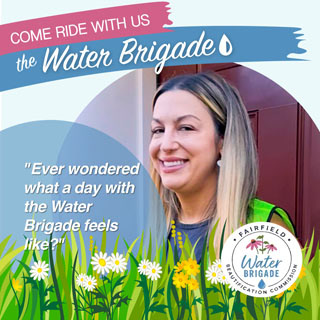
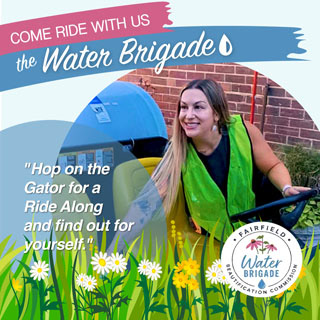
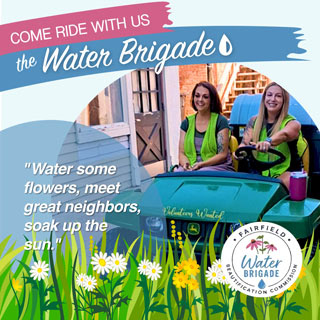
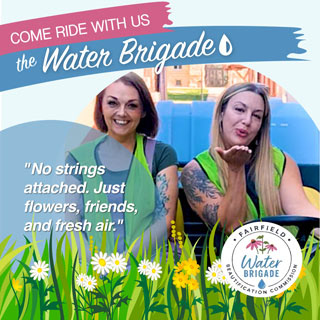
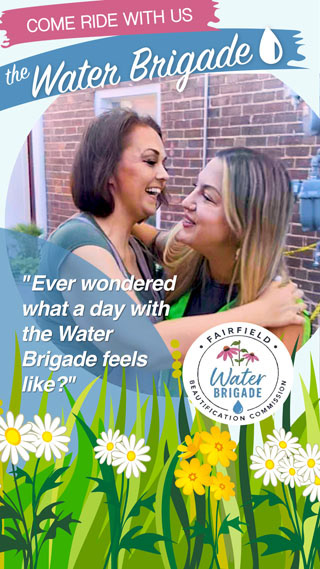
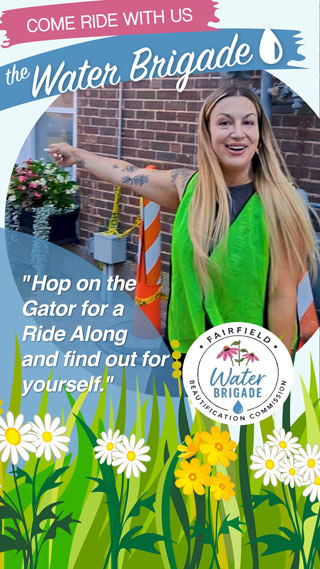
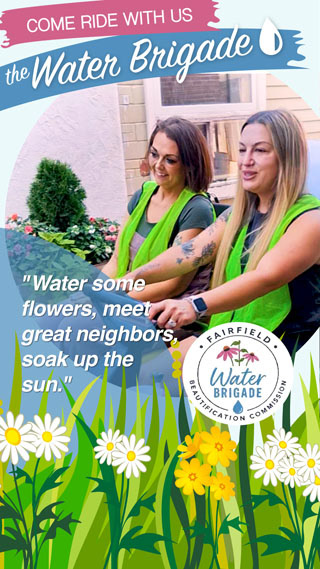
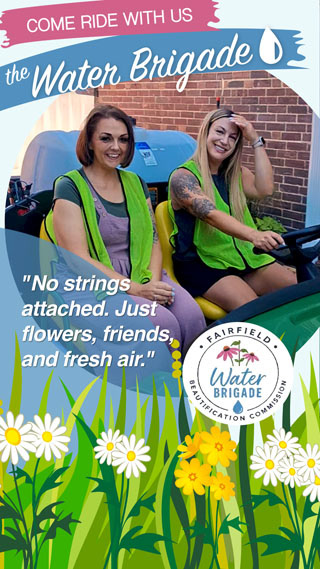
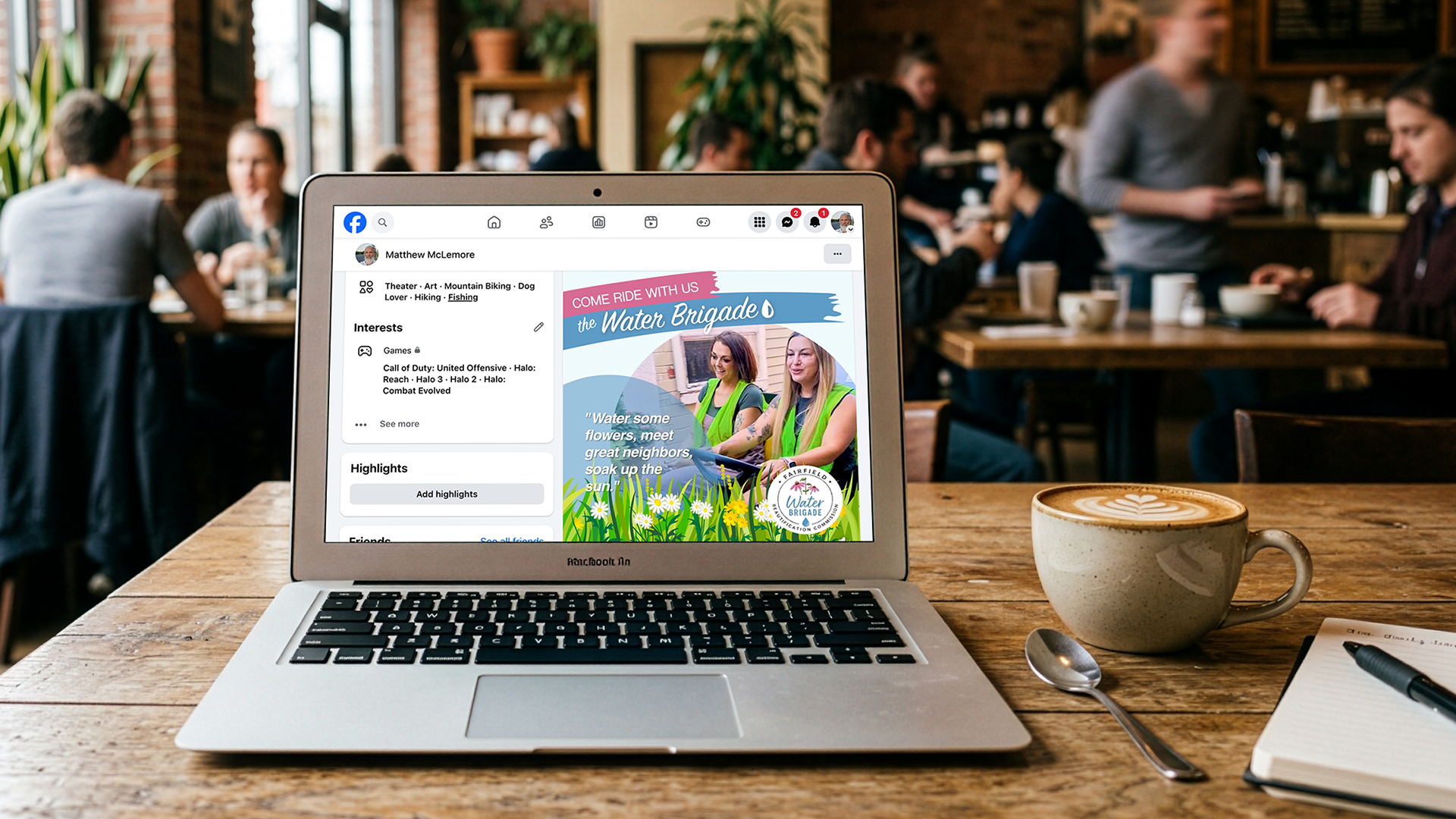
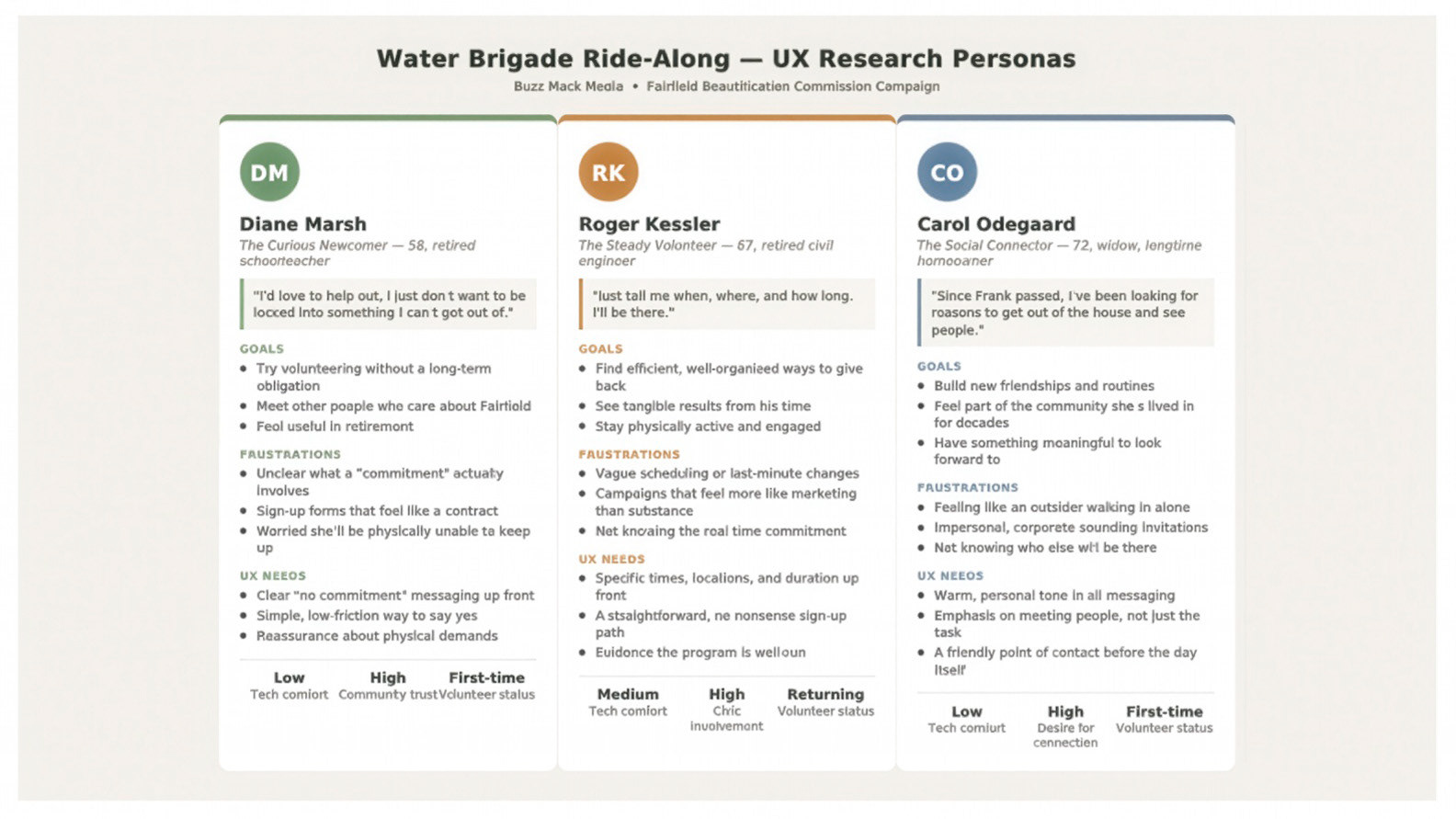
Then came the ask: A "ride-along" campaign, inviting Fairfield residents to spend a morning riding next to an experienced volunteer with the Water Brigade trained by Deborah of the Fairfield Beautification Commission, hopping on the Gator, watering flowers, meeting people, seeing what a little bit of volunteer time actually looks and feels like. Simple enough, except for one very specific wrinkle. The audience wasn't a typical marketing demographic. These were Fairfield homeowners, mostly retired, mostly 50 to 75, many of them volunteers themselves in one capacity or another. You cannot sell this crowd. You can only invite them, and if the invitation smells even faintly of an outside agency trying too hard, they'll see right through it.
So the real challenge wasn't "write good ad copy." It was something trickier: make banner lines, a four-part story sequence, that sounds like they came from a Fairfield neighbor leaning over the fence — not from a conference room three states away.
Process
It started with an early morning and a couple of cameras. Matthew McLemore led the shoot, with Theresa Rachele and Molly Kopp in front of the lens — two energetic local volunteers, and true Fairfielder's both, who brought a sense of place to the footage that no outside talent could have faked. Having real Fairfield residents anchor the visuals meant the campaign felt like it belonged to the town from the very first frame.
Then Matthew went looking before he animated a single word. Working from a quick brief Theresa put together, he went digging through the Commission's own history long before drafting the final copy — old Facebook posts, city-site language, local news write-ups of their volunteer events. What he found was a pattern, and a pretty charming one: warm, plainspoken, almost a little bashful about its own hard work. This is an organization that will log two hundred volunteer hours clearing gutters and then spend the whole recap thanking everyone else. No chest-thumping. Just quiet, steady pride.
Then we wrote it down. A voice like that is easy to lose if it only lives in people's memories, so we turned it into something durable: a full brand voice guide, complete with personality traits, voice pillars (with clear do's and don'ts), a vocabulary bank pulled straight from their own past posts, and tone guidance calibrated specifically for a retired, small-town, homeowner audience. This guide became our north star - the thing every later decision got checked against.
And then we put it to work. With the voice guide in hand, we built out the full campaign: banner copy reworked to feel punchier and more small-town-fun; a four-quote sequence designed to unfold like a tiny story across a banner ad's rotation, pulling someone from curious to convinced one line at a time; and a full slate of YouTube ad headlines, video titles, and descriptions — each shaped to fit wildly different platform constraints, down to the brutal 15-character limit on in-stream ad headlines, while never once losing that neighborly Fairfield tone.
AI got us there faster. Our team made sure it was actually good. This is the part of the process we're proudest of, honestly. AI tools helped us move quickly — sifting through the Commission's existing language, generating copy variations to test, compressing what would normally be days of research and drafting into hours. But the brand voice guided itself, the creative direction, and every piece of finished branding and design work came out of human hands. The visual identity and animation work for this campaign was built by hand in After Effects, crafted to follow the brand guidelines to the letter — not generated, not automated. AI gave us speed. Our team gave the work its judgment, its taste, and its sense of what actually belongs in Fairfield.
.Results
The campaign went out into the world sounding like one consistent voice, not a pile of separately-written assets — banner ads, a story-driven quote sequence, all tracing back to the same documented guide instead of a dozen individual gut calls.
But the nicer surprise is what happens after the campaign ends. That voice guide doesn't get thrown away — it becomes a living reference the Fairfield Beautification Commission can reach for every time they write a new post, announce an event, or ask for another hand of volunteers. The voice we found in their own words will keep sounding like their words, long after this particular campaign has run its course.
For us, it's a tidy little proof of concept for how we like to work: let AI handle the heavy lifting of research and iteration, and let people handle everything that actually requires judgment. Fast where speed helps. Handmade where it matters.
To review the Case study with Brand guide documentation click here
That's Buzz Mack Media ~ Stay Brave Out There!
The Water Brigade